Forståelse af gnidefasthedens rolle i materialets ydeevne
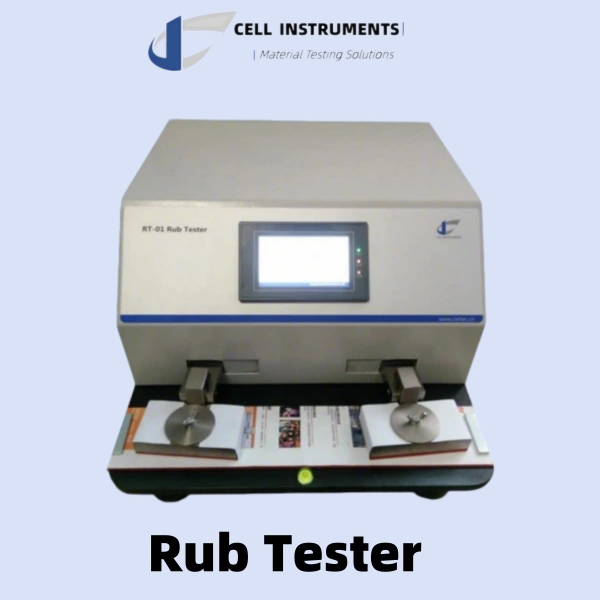
I moderne emballage-, tryk- og mærkningsindustrier er slidstyrke af trykte materialer er en kritisk egenskab, der direkte påvirker produktkvalitet, læsbarhed, og Brandets udseende. Når materialer bevæger sig gennem forsendelses-, håndterings- og slutbrugsmiljøer, er trykte overflader ofte udsat for gnidning, friktion og mekanisk slid.
Det er her, en maskine til gnidefasthed bliver afgørende. Dette instrument er designet til at simulere slid eller gnidning i den virkelige verden og gør det muligt for producenter og kvalitetskontrolteams at vurdere, hvor godt trykfarver, belægninger og trykte overflader modstår mekanisk slitage over tid.
På Cell Instruments, Vi forstår, hvor vigtigt det er for industrier som f.eks. fødevareemballage, lægemidler, daglige kemikalier og elektronik for at garantere udseendet og læsbarheden af deres trykte materialer. Derfor tilbyder vi højpræcisionstestere til gnideægthed, der hjælper fagfolk med at udføre pålidelige, standardiserede tests - især i henhold til ASTM D 5264, det globale benchmark for test af gnidningsmodstand.
ASTM D 5264: Standard for test af gnidningsmodstand
Den brancheanerkendte ASTM D 5264 standard definerer testmetode til evaluering af slidstyrke af trykte materialer ved hjælp af en gnidefasthedsmaskine, der almindeligvis omtales som en Sutherland Rub Tester.
I henhold til ASTM D 5264:
- Det trykte eksemplar er monteret på en gummipude.
- En receptor (uprintet eller printet materiale) er fastgjort til en vægtet arm.
- Gnidefasthedsmaskinen anvender en kontrolleret bevægelse frem og tilbage (slagtilfælde).
- Efter et forudbestemt antal slag skal testprøve og receptor evalueres for nedbrydning eller blækoverførsel.
Denne metode er især nyttig i sammenligning af forskellige printteknologier, Blækformuleringer, Laminater, og Substrater under ensartede laboratorieforhold.
Sådan udfører du en test af gnidefasthed
Korrekt implementering af ASTM D 5264-proceduren sikrer nøjagtige og gentagelige resultater. Her kan du se, hvordan du udfører testen med en maskine til gnidefasthed som f.eks. Cell Instruments RT-01:
Trin-for-trin testprocedure
- Forbered testmiljøet
Oprethold testbetingelserne ved 23 ± 1°C and 50 ± 2% RH as specified in ASTM D4332. - Forberedelse af prøver
Cut the specimen to 76 x 152 mm (3 x 6 in.), ensuring no creases or contaminants. Align the sample so that rubbing occurs across the machine direction. - Mounting Components
- Place the sample face-up on the Sutherland base.
- Mount the receptor (unprinted substrate or identical print) on the underside of the weight using pressure-sensitive tape or clamps.
- Set Parameters
- Choose an appropriate weight: 0.91 kg (2 lb) or 1.82 kg (4 lb).
- Set the number of strokes (usually 25, 50, or 100, depending on product requirements).
- Run the Test
Activate the rubbing fastness machine. It will automatically stop after completing the preset number of strokes. - Evaluate Results
Examine both the sample and the receptor:- Check for ink degradation, loss of gloss, eller substrate damage.
- Evaluate ink transfer onto the receptor using visual grading or colorimetric analysis.
Applications of Rubbing Fastness Testing
The rubbing fastness machine is a multifunctional instrument used across a wide range of industries. It helps validate the durability of printed packaging, labels, instruction manuals, and even decorative surfaces.
Key application sectors include:
- Pharmaceuticals: Ensures label readability for dosage and warnings.
- Food & Beverage: Maintains brand visuals and expiry details through distribution.
- Textiles: Tests print quality and dye fastness on fabric surfaces.
- Medicinsk udstyr: Validates information permanence on sterile packaging.
- Forbrugerelektronik: Prevents information wear-off during handling and storage.
Why Choose Cell Instruments‘ RT-01 Rubbing Fastness Machine
If you’re looking for a reliable, ASTM-compliant rubbing fastness machine, the RT-01 from Cell Instruments is an ideal solution. It supports:
- Precise control of stroke speed and count
- Compatibility with both 2 lb and 4 lb loads
- Adjustable sample holders for flexible specimen types
- Automatic shutoff and durable construction for repeatable testing
Our RT-01 rub tester is widely adopted in quality inspection labs, material R&D departments, og industrial production lines to ensure product integrity and regulatory compliance.
Tips for Better Test Accuracy
To ensure consistent and accurate results:
- Replace worn rubber pads regularly to prevent skewed outcomes.
- Avoid touching print areas with bare hands—finger oils can affect results.
- Keep the machine clean and calibrated.
- Use reference standards for comparison and validation.
Konklusion
Den maskine til gnidefasthed is a critical tool for any organization that values the durability, clarity, and professionalism of printed materials. By following ASTM D 5264 test methods, manufacturers and quality control personnel can objectively evaluate abrasion resistance, mitigate product risks, and improve customer satisfaction.
For those seeking high performance and reliable compliance, the Cell Instruments RT-01 provides a practical, cost-effective solution to meet today’s rigorous testing demands.
Invest in better quality control. Invest in tested results. Invest in Cell Instruments.
 DA
DA  EN
EN  AR
AR  BG
BG  CS
CS  DE
DE  EL
EL  ES
ES  ET
ET  FI
FI  FR
FR  HU
HU  ID
ID  IT
IT  JA
JA  KO
KO  LT
LT  LV
LV  NB
NB  NL
NL  PL
PL  PT
PT  RO
RO  RU
RU  SK
SK  SL
SL  SV
SV  TR
TR  UK
UK